Maximizing Payload: Legal Regulations for a Commercial Fleet of Trucks sets the stage for this enthralling narrative, offering readers a glimpse into a story that is rich in detail with casual formal language style and brimming with originality from the outset.
In this comprehensive guide, we will delve into the legal, safety, environmental, and insurance aspects of optimizing payload for commercial trucks, providing valuable insights for fleet operators and drivers alike.
Legal Requirements for Payload Optimization
In the transportation industry, ensuring compliance with legal weight limits for commercial trucks is crucial for safety and regulatory reasons. Failure to adhere to these regulations can result in penalties and consequences for both drivers and companies. Let's delve into the specifics of legal requirements for payload optimization.Legal Weight Limits for Commercial Trucks
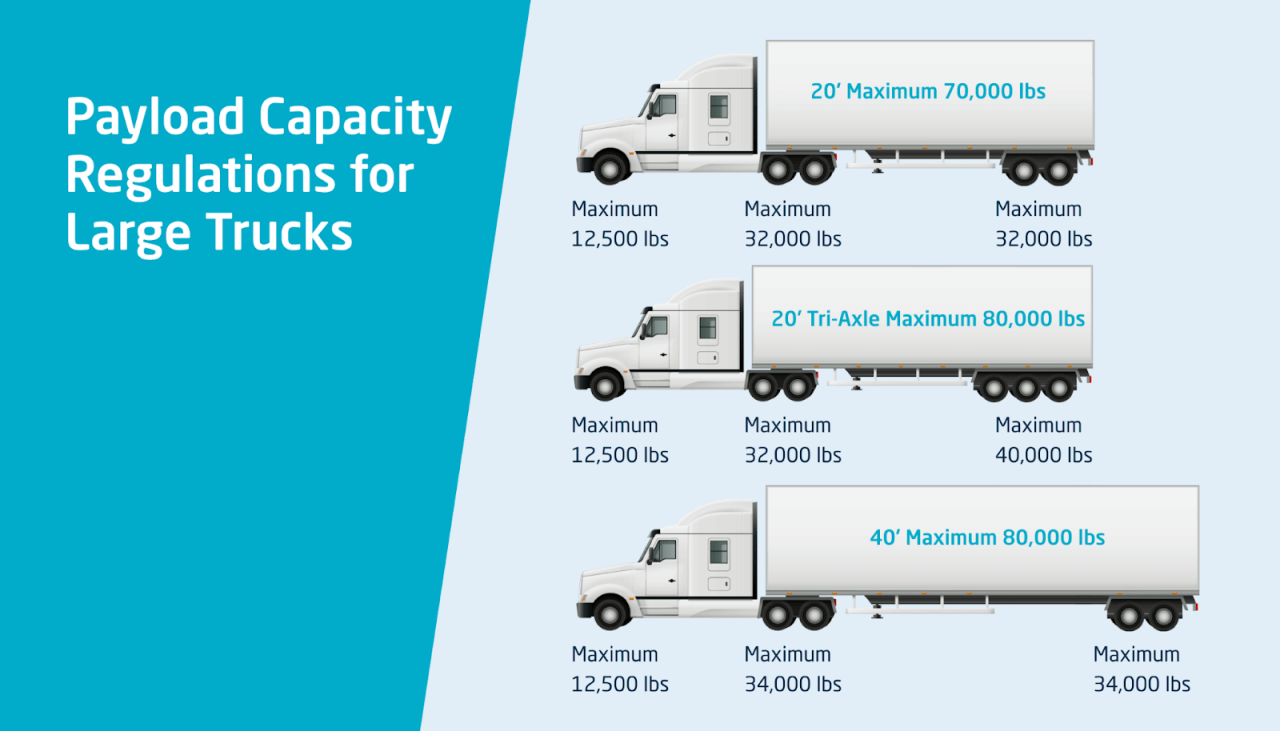
Commercial trucks are subject to weight restrictions set by authorities to maintain road safety and infrastructure integrity. In the United States, the legal weight limits for commercial trucks are determined by federal and state regulations. The Federal Bridge Formula establishes the maximum weight allowed on a single axle and axle combinations based on the spacing between axles. State regulations may further restrict weight limits based on specific road conditions and infrastructure.Regulations for Maximizing Payload
To optimize payload while complying with weight restrictions, trucking companies must carefully distribute the load within the vehicle. This involves strategically positioning cargo to ensure that the weight is evenly distributed and does not exceed legal limits. Additionally, using lightweight materials and efficient packaging methods can help maximize payload capacity without compromising safety or legal compliance.Penalties for Exceeding Weight Limits
Exceeding legal weight limits can have serious consequences, including fines, citations, and potential damage to roads and bridges. In the United States, overweight violations are typically subject to fines that vary depending on the extent of the violation. Moreover, repeated violations can lead to suspension of commercial driver's licenses or the imposition of more severe penalties. It is essential for trucking companies to prioritize compliance with weight regulations to avoid costly penalties and maintain a positive reputation within the industry.Safety Regulations for Payload Optimization
When it comes to maximizing payload in a commercial fleet of trucks, ensuring safety is paramount. Overloading a truck can have severe consequences on stability and braking distance, increasing the risk of accidents. Therefore, it is crucial to follow safety regulations and guidelines to prevent such incidents and ensure the secure transportation of cargo.Impact of Overloading on Truck Stability and Braking Distance
Overloading a truck can significantly impact its stability, especially during maneuvers or sudden stops. The excess weight can cause the truck to sway or tip over, posing a danger to both the driver and other vehicles on the road. Additionally, the braking distance of an overloaded truck is significantly longer, making it harder to stop in emergencies and increasing the risk of rear-end collisions.Guidelines for Securing Cargo to Prevent Accidents or Cargo Shifting
To prevent accidents and cargo shifting during transportation, it is essential to secure the cargo properly. This includes using appropriate restraints such as straps, chains, or tie-downs to keep the cargo in place. Additionally, distributing the weight evenly and securing the cargo to the truck bed can help maintain stability and prevent shifting during transit. Regularly inspecting and maintaining the securing equipment is also crucial to ensure its effectiveness and prevent any mishaps on the road.Environmental Regulations and Payload Optimization
Maximizing payload in commercial trucks can have a significant impact on fuel efficiency and emissions. As trucks carry heavier loads, they require more fuel to transport the goods, leading to increased emissions that contribute to air pollution and environmental damage.Regulations on Emissions Control Devices
When it comes to trucks carrying heavy loads, there are regulations in place that require the use of emissions control devices to minimize the harmful pollutants released into the atmosphere. These devices help reduce the impact of truck operations on the environment by controlling and reducing emissions such as nitrogen oxides, particulate matter, and greenhouse gases.- Trucks must be equipped with diesel particulate filters (DPF) to trap and remove harmful particles from the exhaust.
- Selective catalytic reduction (SCR) systems are used to reduce nitrogen oxide emissions by converting them into harmless nitrogen and water.
- Exhaust gas recirculation (EGR) systems help lower nitrogen oxide emissions by recirculating a portion of the exhaust gases back into the engine.
Sustainable Practices for Environmental Impact Reduction
Implementing sustainable practices can help minimize the environmental impact while optimizing payload in commercial trucking operations. These practices focus on reducing fuel consumption, emissions, and overall carbon footprint.- Utilizing route optimization software to plan efficient and eco-friendly routes, reducing fuel consumption and emissions.
- Investing in fuel-efficient technologies such as aerodynamic designs, low-rolling-resistance tires, and hybrid powertrains to improve fuel efficiency.
- Adopting alternative fuels like biodiesel, compressed natural gas (CNG), or electric power to reduce greenhouse gas emissions and dependency on fossil fuels.
- Promoting driver training programs to educate drivers on eco-driving techniques and practices that can help minimize fuel consumption and emissions.
- Regular maintenance and upkeep of trucks to ensure optimal performance and efficiency, reducing emissions and environmental impact.
Insurance and Liability Considerations
 When it comes to commercial trucks carrying maximum payload, insurance and liability considerations play a crucial role in ensuring the safety and financial security of the fleet.
Insurance Requirements for Commercial Trucks
- Commercial trucks carrying maximum payload are required to have specific insurance coverage to protect against potential risks and liabilities.
- Insurance coverage typically includes liability insurance, cargo insurance, and physical damage coverage to safeguard the truck, cargo, and other parties involved.
- It is essential for trucking companies to comply with state and federal insurance regulations to avoid penalties and legal consequences.
Liability Issues in Overloaded Trucks Accidents
- In the event of accidents involving overloaded trucks, liability issues can arise due to the increased risk of vehicle instability, braking issues, and potential damage to roads and infrastructure.
- Trucking companies may face legal consequences and financial liabilities if it is determined that the accident was caused by overloading the truck beyond its capacity.
- Proper payload optimization practices and adherence to weight limits are crucial to minimize the risk of accidents and avoid liability issues.
Impact on Insurance Premiums
- Insurance premiums for commercial trucks may be affected by payload optimization practices, as carrying maximum payload increases the risk of accidents, cargo damage, and liability claims.
- Trucking companies that prioritize safety, compliance with regulations, and proper maintenance of vehicles are likely to receive lower insurance premiums as they pose lower risks to insurance providers.
- Implementing effective payload optimization strategies can help reduce insurance costs and improve overall risk management for commercial trucking operations.
Conclusion
As we conclude our exploration of Maximizing Payload: Legal Regulations for a Commercial Fleet of Trucks, it becomes evident that adhering to legal requirements, ensuring safety precautions, and considering environmental impact are vital for fleet management success. By understanding these regulations and implementing best practices, commercial truck operators can navigate the complexities of payload optimization with confidence.
FAQs
What are the legal weight limits for commercial trucks?
Commercial trucks typically have weight limits set by law, ensuring safe operation on roads and highways. These limits vary depending on the type of truck and the specific regulations in each state or region. It's crucial for fleet managers and drivers to be aware of and comply with these weight restrictions to avoid penalties or consequences.
What safety measures are required for transporting maximum payload?
Transporting maximum payload requires adherence to strict safety measures to ensure the well-being of drivers, other road users, and the cargo itself. Some common safety measures include proper cargo securement, regular vehicle maintenance, and adherence to speed limits and traffic laws. Implementing these measures can help prevent accidents and ensure a smooth transportation process.
How does maximizing payload affect fuel efficiency and emissions?
Maximizing payload can have a significant impact on fuel efficiency and emissions. Heavier loads require more fuel to transport, leading to increased emissions and reduced fuel economy. By optimizing payload and following fuel-efficient driving practices, fleet operators can minimize their environmental footprint and reduce operating costs.
What insurance requirements apply to commercial trucks carrying maximum payload?
Commercial trucks carrying maximum payload typically have specific insurance requirements to protect against potential liabilities and risks. These requirements may include cargo insurance, liability coverage, and comprehensive insurance policies tailored to the needs of commercial trucking operations. It's essential for fleet operators to work closely with insurance providers to ensure adequate coverage for their vehicles and cargo.